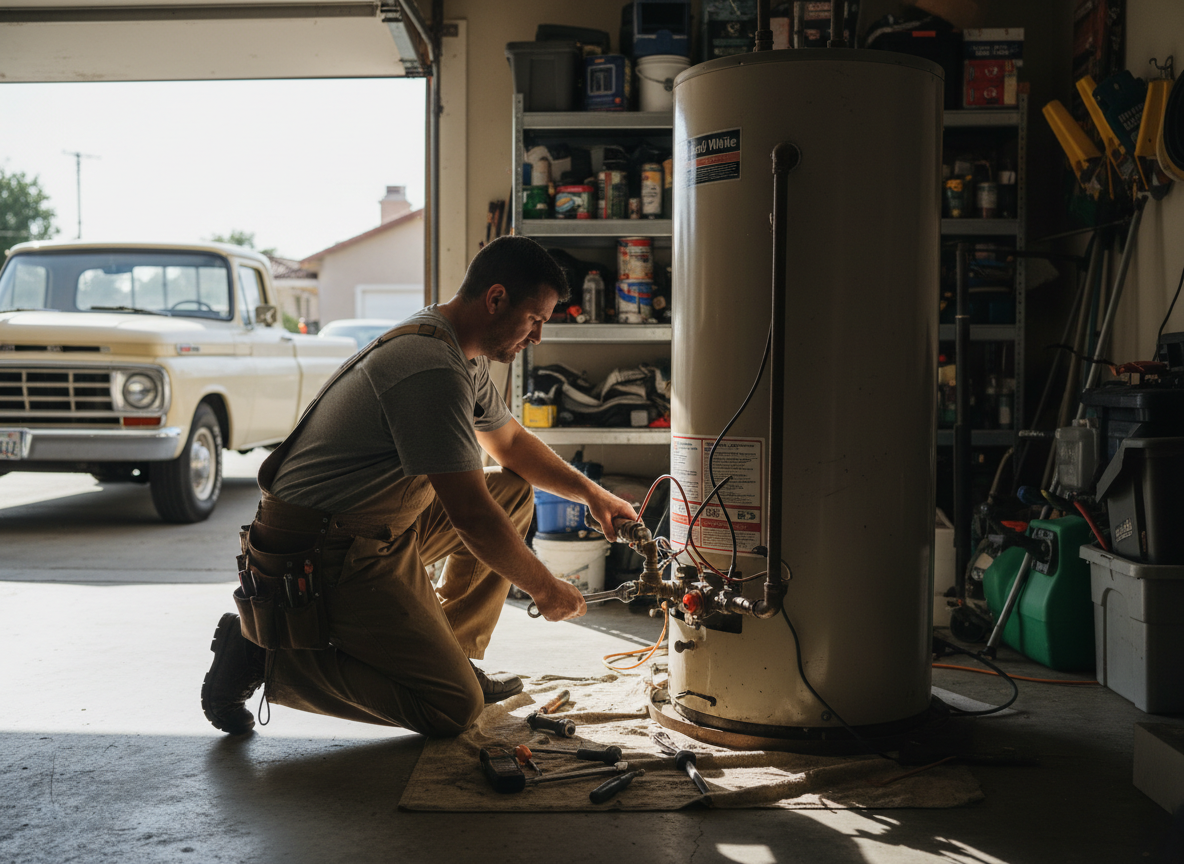
Water heater repair calls in San Pasqual Valley often trace back to older ranch homes along San Pasqual Valley Road and Bear Valley Parkway where mid-century tanks sit in garages or utility rooms with limited ventilation. The hot-summer Mediterranean climate brings long dry periods that concentrate minerals in the supply, speeding up sediment layers that shorten element life and trigger leaks. Our crews reach these properties quickly from central Escondido, working around narrow private drives and the open-space edges near the San Diego Zoo Safari Park without disrupting the rural feel of the neighborhood.
San Pasqual Valley sits in a shallow basin that drains toward the San Dieguito River, so homes closer to San Pasqual Union School and the academy grounds can see slight soil movement after rare winter rains that sometimes shifts supply lines. We keep service trucks stocked for both tank and tankless units common on these larger lots, and we coordinate same-day water heater leak repair when residents notice damp spots near the unit. Twenty-four-hour availability covers the valley from early morning calls out past the Safari Park entrance to evening issues in homes off San Pasqual Road.
Around San Pasqual Valley
We regularly work near:
- 📍San Diego Zoo Safari Park
- 📍San Pasqual Union Elementary School
- 📍San Pasqual Academy
- 📍Bear Valley Parkway
- 📍San Pasqual Valley Road
Water Heater Repair in San Pasqual Valley — Local Notes
- •Many San Pasqual Valley properties use older galvanized or copper lines that corrode faster when sediment from the local water source builds up inside tanks during the long dry season.
- •Valley roads and private drives near San Pasqual Academy limit truck access, so we stage equipment at the street and carry parts in by hand on larger lots.
- •Homes on the eastern edge toward the riverbed experience occasional minor ground shifts after winter rains that can kink flexible water lines feeding the heater.
- •Ranch-style houses here often place units in detached sheds or exterior closets, exposing them to temperature swings that accelerate anode rod wear.