2026-08-29 ·
Strange Noises From Your Water Heater? What Escondido Homeowners Should Know
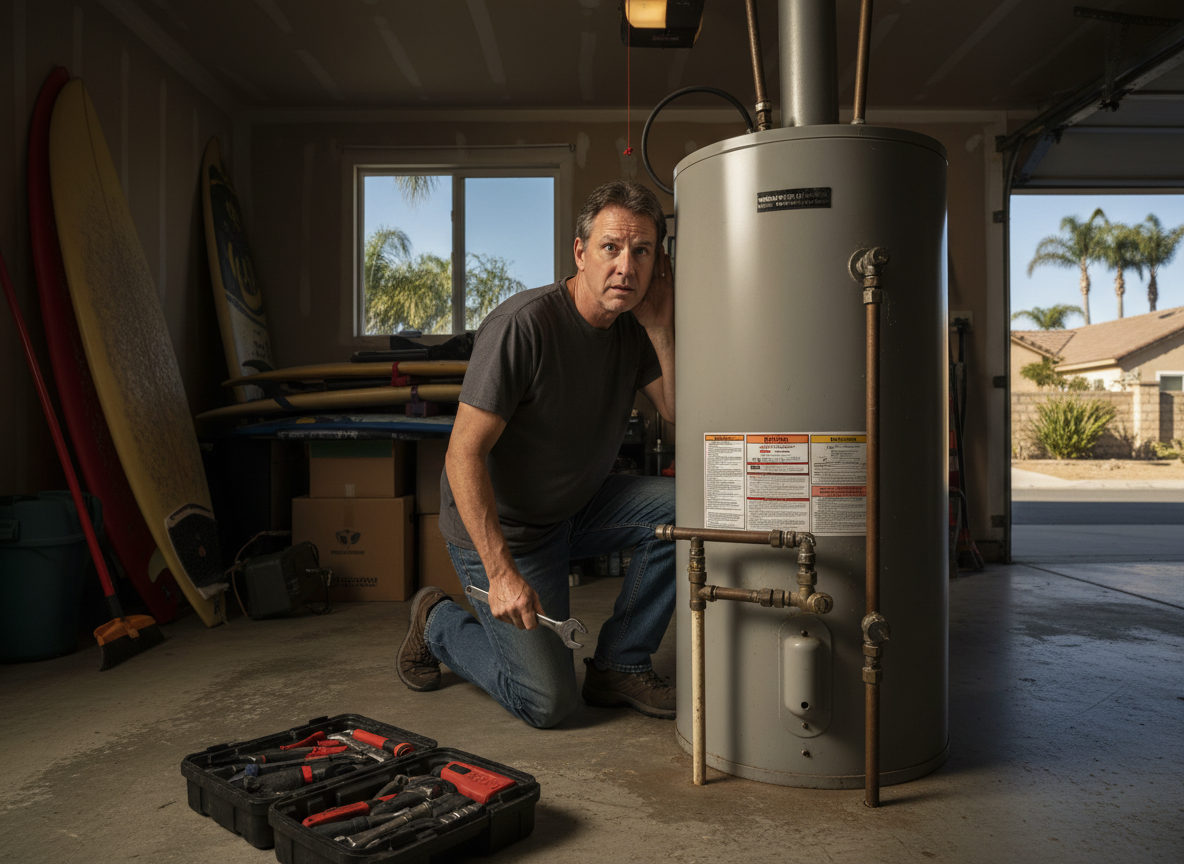
Rumbling or banging from a water heater in Escondido often points to sediment buildup on the tank bottom or a failing heating element, especially in homes older than 10 years. These sounds become more noticeable after dry summers when water demand spikes and mineral deposits harden faster in the hot-summer Mediterranean climate of San Diego County.
Common Noises and What They Indicate
Homeowners in Old Escondido and Downtown Escondido frequently report popping or crackling when sediment layers trap steam bubbles. This occurs because local water carries higher mineral content from the San Pasqual Valley aquifer, and dry summers concentrate those minerals inside tanks. A high-pitched whistling usually means a restricted inlet valve or scale on the dip tube, conditions that appear more often in 40-gallon and 50-gallon units installed in homes built before 1990 near Kit Carson Park.
Banging or hammering noises can come from thermal expansion when pipes are secured too tightly against older framing in San Pasqual Valley homes. Electric models tend to produce sizzling when elements short out due to sediment, while gas units may rumble from burner misalignment. These patterns differ from newer homes in Vista or San Marcos where softer water reduces buildup rates.
Local Water and Climate Effects on Heater Performance
Escondido's dry summers increase evaporation and mineral concentration in supply lines, accelerating scale on heating elements and anode rods. Older housing stock in the Kit Carson Park area often uses galvanized piping that adds iron particles, worsening sediment layers inside tanks. During cooler winter months, temperature swings cause more frequent heating cycles, which loosens scale and creates audible popping that homeowners notice first thing in the morning.
Water heater noise diagnostics help pinpoint whether the issue is isolated to the tank or involves supply lines common in Downtown Escondido properties. Ignoring these signs can lead to reduced efficiency and eventual leaks, especially in units approaching 8–12 years of service life.
Steps to Diagnose Noises Before They Worsen
Turn off power or gas to the unit and drain a few gallons from the bottom valve to check for visible sediment. Note the exact sound timing—during heat-up cycles or after hot water use—and whether it occurs in both upstairs and downstairs fixtures. Record the model age and capacity, then compare against typical lifespans for Escondido installations exposed to local mineral levels.
If the noise persists after flushing, schedule water heater noise diagnostics to inspect the dip tube, anode, and heating elements without risking further damage. Homeowners in the San Pasqual Valley often combine this check with a review of expansion tank function to prevent pressure-related banging.
When Repair or Replacement Becomes Necessary
Persistent rumbling after two flushes usually requires professional water heater repair to replace the anode or clear heavy scale. In homes near the Escondido History Center with original tanks, replacement often makes more sense once efficiency drops and repair costs approach $400–$800. Linking noise issues to potential leaks helps owners decide between repair and full replacement before a tank failure floods a garage or utility room.